September 8, 2013, Sunday, Doi Chang Total: 9770km
Audoyo made sure I knew breakfast was available and that I ate, telling me (it being translated from Akar, her hill tribe language to English, through Jamby), “Keep eating, even if it doesn’t taste good, just eat up!” It tasted great. Minced pork, grilled onions and meat, and a soup. Oh, and fresh, raw slices from the biggest cucumber imaginable!

After my fill of breakfast, Jamby and I moved over to the café, where I wrote for a bit, had some coffee, scanned the view and talked with the family.
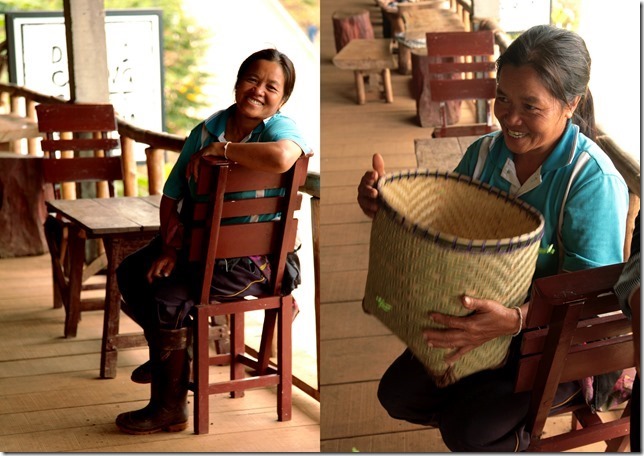


A local farmer
The café serves as a hang out for the family, local farmers, family friends and villagers.
Oh, P.S., I’m staying here today and doing a photo essay on the plantation. And this note serves as my segue into my next activity for today: A tour of the coffee farm and production process.
A bit on Doi Chang Coffee:
Father (I will refer to all the members of the family by their position in the family as that is how Jamby talked about them with me saying either “brother did this, or sister is doing , etc, etc) was an antique and minority crafts/collectible tradesmen in Burma(though his tribe is originally from Southern China). He was decently successful by Burmese standards but resolved to move his family to Thailand for higher quality of life.
He gathered his family and started trekking through the mountains. Bribing Thai border policeman to let them pass through. Along they way, he found Doi Chang mountain, the closest resemblance to his foregone home, and settled down, being one of the first hill tribe immigrants(He is Akar) to settle in the region. His first business venture was farming: opium farming to be specific. After many years of farming, the Thai government initiated programs to rid the region of opium growth by replacing the crop with some other agricultural product. In this area, the gov’t proposed coffee; all the farmers were skeptical. Though growing opium was lucrative, Father wanted to engage in morally sound business and was the first to start cultivating coffee. And thus, Doi Chang Coffee Farm started here, 30 years ago when he took this step.

The first Doi Chang coffee trees
Other farmers, followed suit, and now the mountain is covered in coffee. Some say that Doi Chang is what sparked Thailand’s interest in coffee. Father started growing the first coffee. Another group, Doi Chang Coffee Company was the first to incorporate and start distributing the coffee. Doi Chang Coffee Farm decided to become their own distributor after too many late payments from Doi Chang Coffee Company. Doi Chang Coffee Farm, can handle late payments, but the farmers they buy from are on a tighter cash flow.
Doi Chang Coffee Farms found it made more sense to operate independently.
DCCF cultivates, harvests and processes all of its coffee, producing at minimum 100tons of coffee per season.

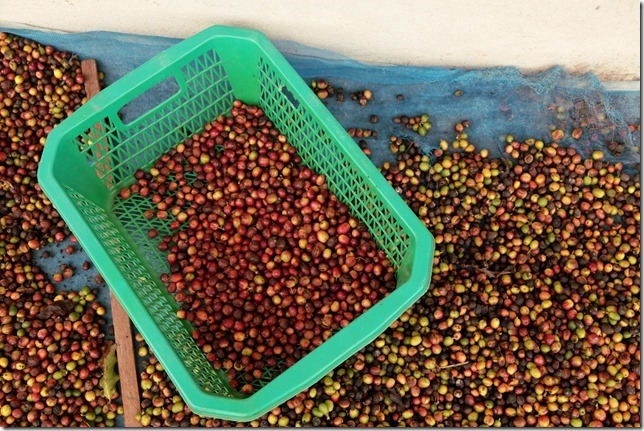
The bean harvest occurs October through March, though, these pictured beans have sprouted a bit early.
During harvest, the farmers go out, collect the beans, bring them to the coffee bean washer, weigh them and collect their payment, dumping them in the first of a series of four pools. Here, the beans begin the Washex process: a four day process which removes the cherries skins and washes the beans.
The beans spend a full day soaking, which loosens the pulp and skin from the bean itself.

After the first soak, they pass through the pulping machine, which DCCF purchased from Columbia in 2012, as an upgrade from an older, Thai-made machine.
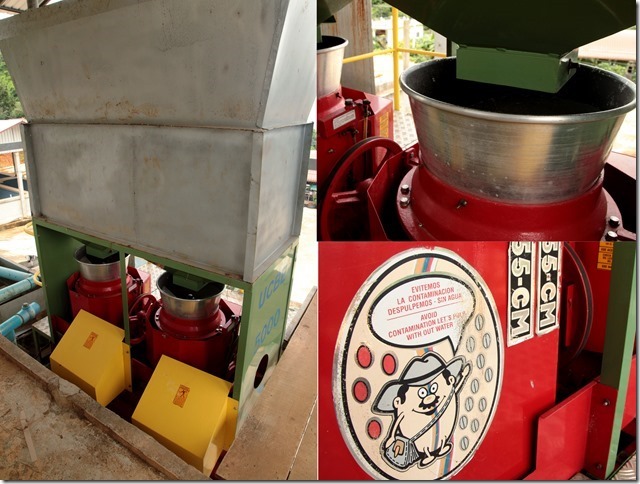
The pulp and skins are removed and the beans move into the washing process.

After the cherry skins are removed, the beans spend three days soaking: one day in the first set of pools, one day in the second set of pools and one day in the third set of pools. The washing’s given to the beans evens out the beans’ flavor, giving them all a clean taste.

After this process, when the sun is out, so are the beans; its takes approximately 3-4 days for the beans to completely dry(12-14% moisture)
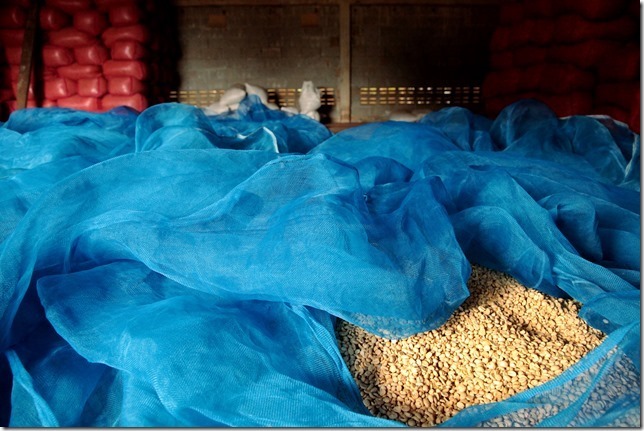

Production takes a pause at this point as the beans are stored with their “parchments” in 50kg bags, still intact until an order comes in. Doi Chang stores two piles: one for the most recently dried beans and another is left to harvest to age; different consumer markets have their own bean taste preference.
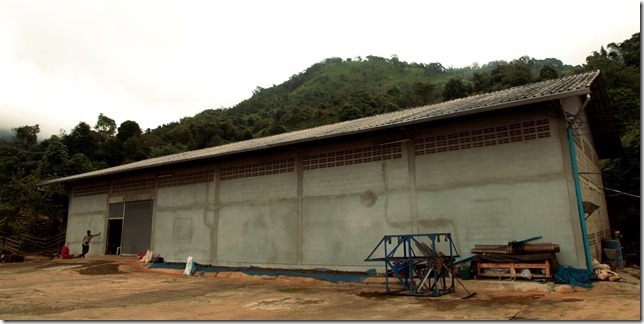
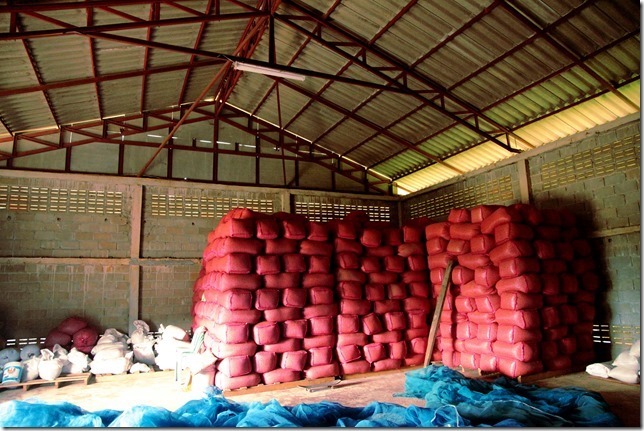
In storage, the beans remain in their parchments to preserve their freshness. Once an order is received a machine removes the parchments from the skin and separates the beans into different grades, determined by bean size: A, AA, B, C ( A being biggest).


The parchments are placed back in the coffee plantation as ground cover/fertilizer.


Doi Chang prides itself on growing the highest quality of beans, shaded, in the cooler highlands on Doi Chang’s upper slopes. The average bean grown on these slopes is going to be a cut above the rest, yet Doi Chang, takes it a step further to remove any “defective” beans: bug bitten, misshapen and old. At first I couldn’t even see the pattern for removing the “defective” beans. Jamby pointed out a small pin prick in the beans: bugs. I’d peruse the beans and pick the pock marked beans, each time asking, “even this bean?” “Yes, even that bean” Quality is a serious matter here.

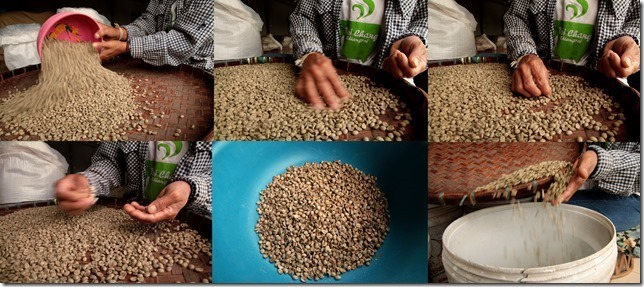

The quality beans are bundled into 50 kilogram sacks and distributed to their respective orderers.
My tour continued beyond the farm, when Poomjitr a local macadamia farmer offered to take me around the village and surrounding area. Yes, please! He took me to meet the Father at a local hangout, a Lisou villagers house(in our limited Thai/English conversation I found out he speaks four languages: Lisou, Aka, Thai, and Chinese!) and thus I was able to learn a lot more about the area;( though I’m still confused as to why/how he speaks Chinese, Okay sure, he learned at Chinese school, but still haven’t figured out who set up these schools, etc), his macadamia farm, his brother’s hill side home, the Doi Chang vista point, a hill top Buddhist temple/monastery, and his guesthouse.
Had dinner with the family that night and chatted with Jamby and brother (whom I found out spoke Chinese after another family member let the cat out of the bag) Great people, good food, wonderful evening, comfortable home, good views.
Some places are similar to home, some places feel like home, some places are home. I’ve got family in a few places now…. Doi Chang is one of them.